

Is Permanent Treatment for Skin Pigmentation Possible? Key Facts to Know
If you have ever observed uneven skin tone, dark spots, or patches on your skin, you are certainly not alone. Conditions such as melasma, acne scars, and sun spots are common skin pigmentation problems that many people find difficult to manage. But there are many ways to reduce pigmentation and restore the skin to its original tone. The key factor is early detection and steady treatment. Proper skincare and treatment can reduce many pigmentation problems.
What Does Skin Pigmentation Mean?
Pigmentation of the skin is determined by melanin, the pigment that gives the skin its colour. Melanin is a natural pigment produced by specialized cells in the skin known as melanocytes that helps protect the skin from harmful ultraviolet rays. However, when melanin production increases or decreases, pigmentation issues can happen.
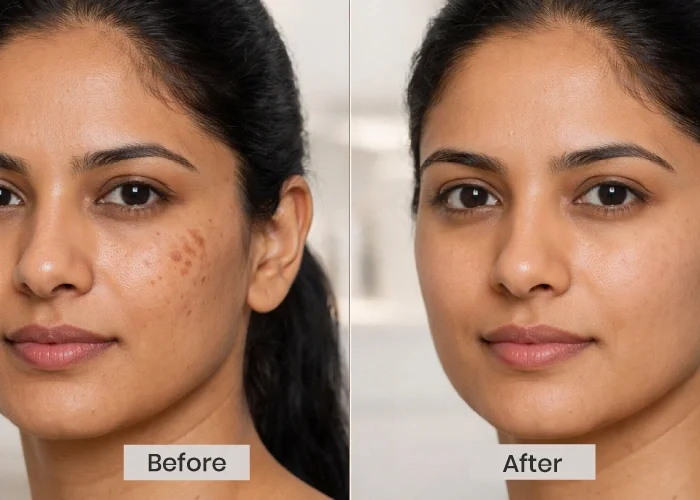
Skin Pigmentation
What are the Causes of Skin Pigmentation?
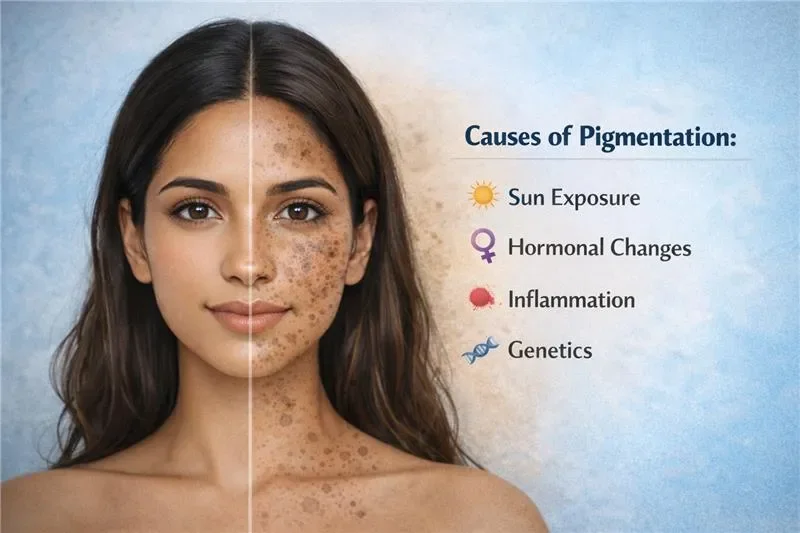
Several factors can cause pigmented skin:
Hormonal Changes: Women may develop melasma, a common pigmentation issue, due to pregnancy, contraceptive use, and hormone replacement therapy.
Post-Inflammatory Hyperpigmentation (PIH): Skin inflammation or injury, including eczema, acne, or cuts, can trigger increased melanin production during healing.
Genetics: The genetic composition can also influence how the skin reacts to sunlight and other external triggers.
Ageing: Slows skin cell turnover, allowing sun damage to show up as uneven pigmentation or dark spots.
Sun Exposure: When the skin is exposed to ultraviolet rays for long periods, it increases melanin production as a defence mechanism. However, overexposure to UV rays can cause sunspots and other skin pigment problems.
What Types of Skin Pigmentation are Most Common?
Changes in pigmentation of skin fall into two categories: Hyperpigmentation (darker patches) and Hypopigmentation (lighter patches).
Hyperpigmentation: The skin becomes darker due to excessive melanin production. Some key types include post-inflammatory hyperpigmentation, melasma, sunspots/age spots, medication-induced pigmentation, and Addison’s disease (a hormonal imbalance causing dark spots).
Hypopigmentation: The skin loses colour when melanin production stops or reduces. Some of the common types include:
Pityriasis Alba: Often found in children, it causes white, round patches with slight scaling.
Tinea Versicolor: Fungal infection that interferes with melanin production, causing patchy discoloration.
Albinism: A hereditary disorder that leads to reduced melanin production. People with this condition have very light hair, skin, and eyes.
Vitiligo: A condition in which the immune system destroys melanocytes, resulting in pigmented skin in the form of white, smooth patches.
Effective Treatments for Loss of Skin Pigment
Here are some ways to fix skin pigment problems:
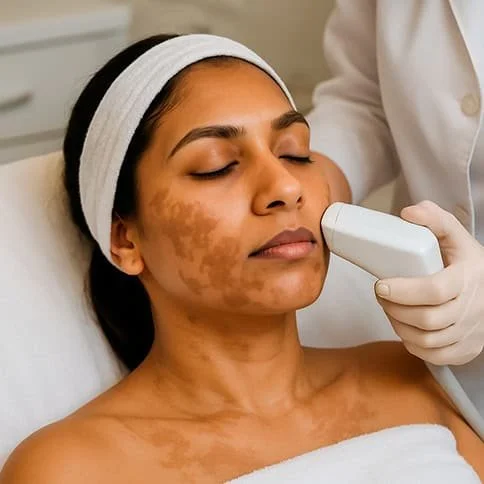
Microneedling: Reduces pigmentation and stimulates collagen
Laser Therapy: Works to reduce melanin deposits to help pigmentation fade quickly
Prescription Creams: Corticosteroids, retinoids, and hydroquinone
Chemical Peels: Helps eliminate dead skin layers for a clearer, brighter skin
Daily Skincare Routine for Managing Skin Pigment Issues
Cleanse your skin gently to minimize irritation
Avoid bleaching agents or harsh scrubs
Use sunscreen (SPF 30+) every day
Moisturize your skin with ceramides and niacinamide
Things to Avoid to Minimize Problems with Pigmentation of Skin
Don’t squeeze or pick acne, which can cause post-inflammatory hyperpigmentation.
Avoid unregulated depigmenting agents and over-the-counter steroids without guidance.
Treat acne as early as possible to prevent scars. Solicit expert help if pigmentation changes in shape, colour, or size.
Avoid processed, high-sugar beverages and foods.
Avoid using baking soda because it may harm your skin.
Conclusion:
Pigmentation, dark spots, and uneven skin tone can affect your confidence, but the right skincare can help visibly improve your skin. If you are seeking quality skin pigmentation treatment in Kingston, Ontario, choose FAM Medical Aesthetics. The professionals at FAM Medical Aesthetics use the Rapid DPC Pro machine, developed by SharpLight Technologies, to treat various skin issues.
SharpLight is a prominent name in the medical aesthetics industry, known for manufacturing and supplying a diverse range of products to industry professionals across the world. With effective skin pigment treatment in Kingston, Ontario, at FAM Medical Aesthetics, you can achieve brighter, clearer, healthier-looking skin. So, reveal your natural glow with treatments tailored to your skin’s unique needs.
.
