

Laser Hair Removal (LHR) - Underarms, Brazilian, Lower legs
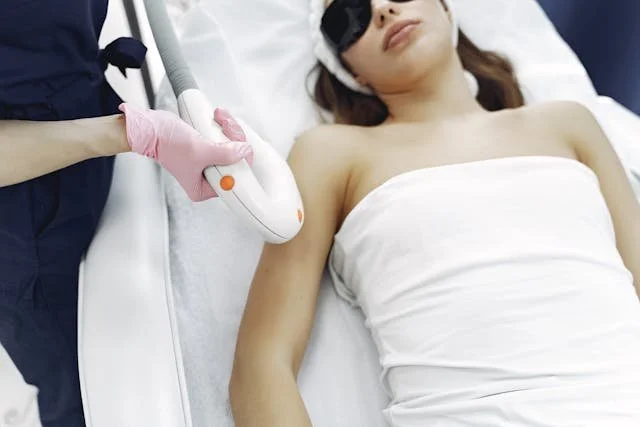
Client: 25-year-old Female, Paramedic
Treatment Year: 2025
Client Background
Sandy* is a full-time paramedic working long shifts in emergency medical response in Kingston, ON. Due to her demanding schedule, she sought a low-maintenance,
long-term hair reduction solution. Her priorities included:
Eliminating frequent shaving irritation and ingrown hairs
Reducing grooming time between 12-hour shifts
Achieving smooth skin for better comfort under medical uniforms and PPE (Personal Protective Equipment) gear
She reported sensitivity from shaving, especially in high-friction areas, which often caused redness and discomfort during long field calls.
Assessment & Treatment Plan
After a detailed consultation and Fitzpatrick skin type evaluation, she was deemed an excellent candidate for IPL (intense pulse light) laser hair removal.
Target Areas:
Underarms, Brazilian (bikini), Lower legs
Treatment Protocol:
6-8 laser sessions spaced 2–3 weeks apart
Customized laser settings adjusted per body area and skin response
Pre-treatment care included shaving 24 hours before and avoiding sun exposure
Post-treatment soothing protocols used to support sensitive skin
Challenges
Her active lifestyle and outdoor emergency calls increased potential for sun exposure, so strict SPF (Sun Protection Factor) compliance was advised. Shift work also required flexible booking times, which FAM accommodated through tailored appointment scheduling.
Results
The treatment exceeded expectations with highly successful outcomes:
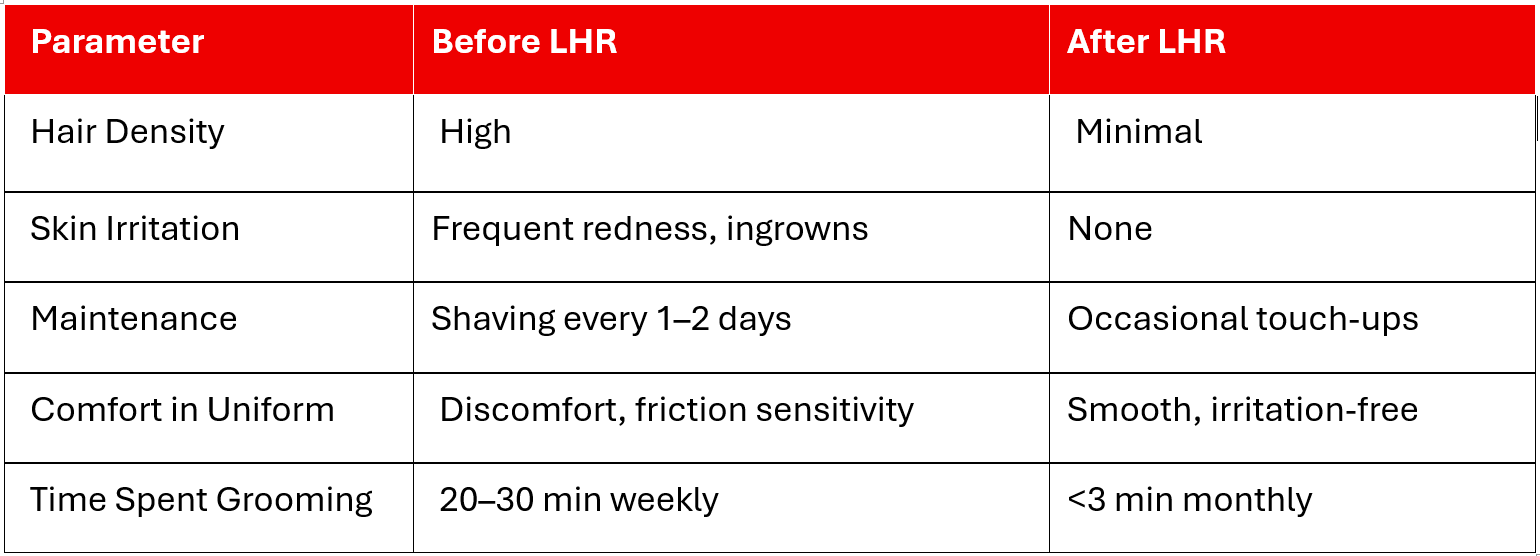
92–95% hair reduction across treated areas
Complete resolution of shaving irritation and ingrown hairs
No adverse reactions due to optimized laser calibration
Smoother skin with improved texture and tone
Significantly improved comfort during long shifts
Estimated grooming time reduced by 90%
She expressed high satisfaction with the durability of results, noting that even after intense physical emergency responses, her skin remained smooth without friction-induced irritation.
Client Testimonial (Summarized)
“Laser hair removal has made my routine so much easier. No more painful ingrowns or shaving before every shift. My skin stays smooth even under uniform gear for hours. FAM worked around my schedule and made the entire process effortless.”
Clinical Takeaway
Laser hair removal proved to be an ideal solution for a first-responder with sensitive skin and limited personal time. This case reinforces that:
LHR is safe and effective for medical professionals when personalized settings are applied
Sun-exposed workers benefit significantly from strict SPF guidance
Flexible scheduling improves adherence and outcomes for shift workers
High-friction uniform environments make LHR especially valuable
*Name changed to protect client confidentiality
Tammy’s Clear Skin Story
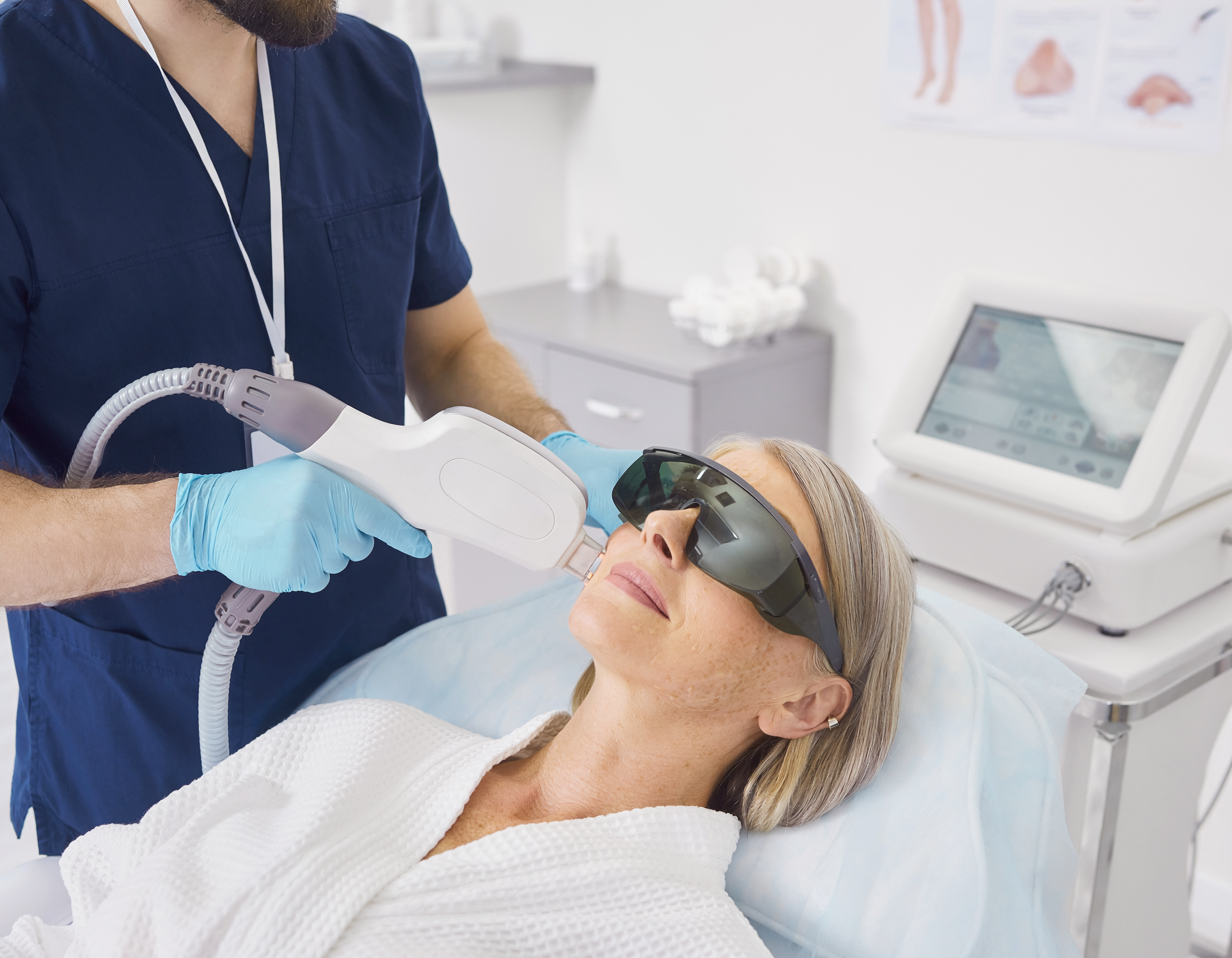
Complete Laser Treatment guide for Facial Vascular Pigmentation at FAM Medical Aesthetics
Do facial veins, redness, or uneven skin tone bother you? Is laser treatment right for you?
This case study follows Tammy’s journey at FAM Medical Aesthetics. It explains things you need to know about laser therapy for facial vascular pigmentation.
Whether you found us by searching “best laser clinic for facial veins,” “spider vein removal near me,” or “how to treat facial hyperpigmentation,” you have taken the step in the right direction. At FAM, you’ll discover what to expect before, during, and after treatment. Our team is equipped to provide you the care for getting clearer skin.
Why Tammy Chose Laser Treatment for Facial Veins
Tammy noticed red vessels and patches of uneven pigmentation on her cheeks and nose. She wanted to improve her skin’s appearance. Laser treatment is one of the top methods for reducing facial redness, spider veins, and pigmentation—making it a popular choice at our clinic.
Though it may be surprising to know, these concerns emerge as we age, after sun exposure, or due to genetics. Visible facial veins, also called telangiectasia or spider veins, can be stubborn. Those who have these conditions struggle when using over-the-counter creams and home remedies. That’s why more people, like Tammy, are turning to professional laser therapy to restore their skin’s natural clarity.
Step 1: Safety First – Comprehensive Consultation
Before any procedure, we at FAM do a thorough review to ensure laser therapy is safe and suitable for you. Here’s what we checked for Tammy:
No recent sunburn or tanning (sun-exposed skin can be more sensitive)
No new skincare products or cosmetic treatments
No medications or allergies that could make laser unsafe
Healthy skin—no infections or open wounds
Pain level: 0/10 (Tammy felt comfortable and relaxed)
Skin type: Fitzpatrick III (medium tone)
Why is this important?
Medical and skin history helps us avoid complications and aim best result. At FAM Medical Aesthetics, we have a personalized approach to every client of ours. By reviewing your history and checking your skin’s condition, we strive to prevent complications and maximize your results.
Step 2: Education & Setting Expectations
We know that the best outcomes start with informed patients. We reassured Tammy that her facial vascular pigmentation was harmless. We let her know about SharpLight laser device that we use, known for safely reducing visible blood vessels and pigmentation.
Tammy asked us, “Is laser pigment removal safe?”. We acknowledged, “Yes, when performed at FAM Medical Aesthetics by trained professionals who use use the right technology for your skin type.”
Our team explained the science behind her treatment, what results to expect, and how many sessions might be needed. We encourage open communication and take the time to answer every question. Tammy left her consultation feeling informed and confident about her next steps.
Common patient questions:
Do I need to take time off work?
Is risk of scarring real?
How soon will I see results?
How many sessions will I need?
We answer all of these—and more—below.
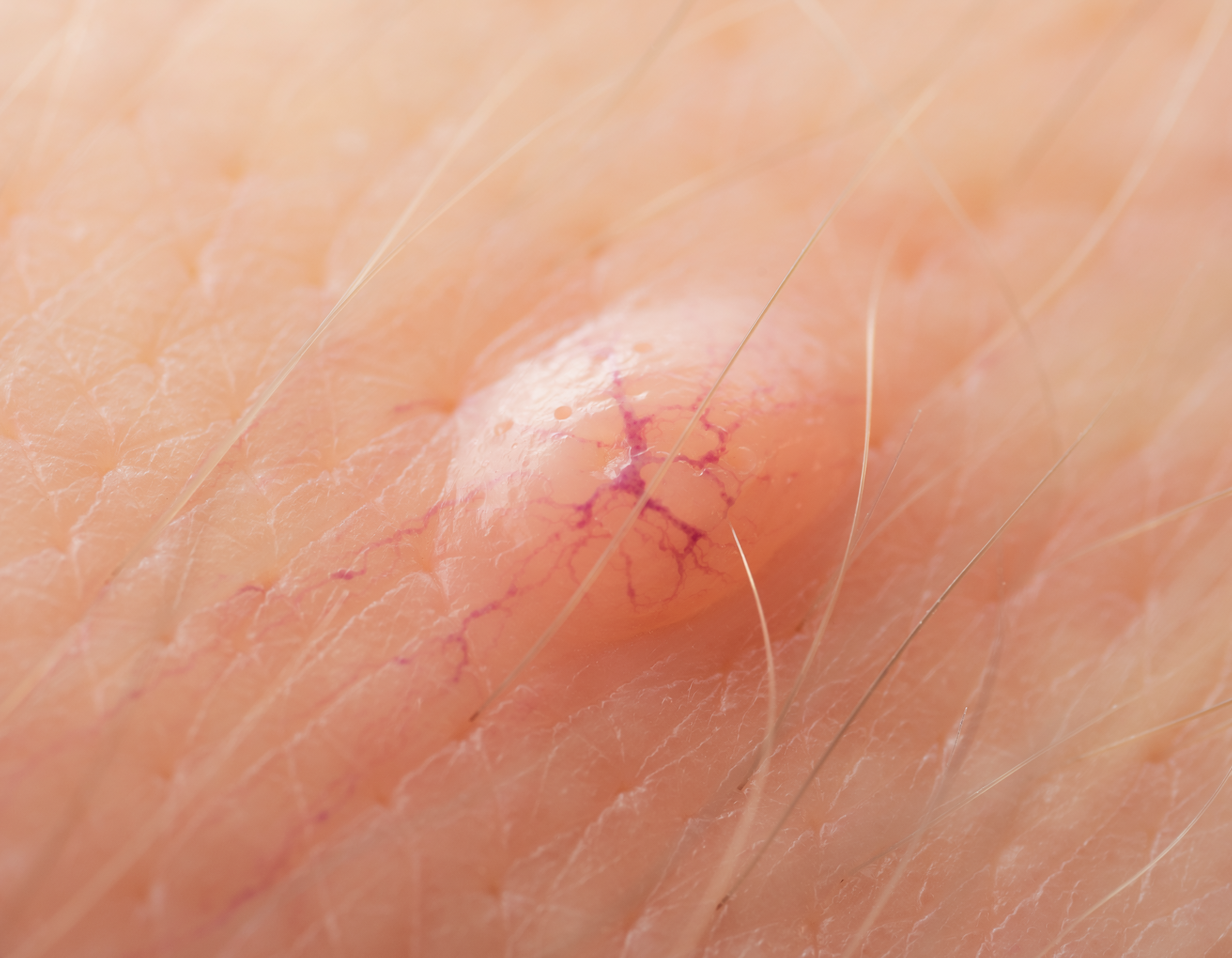
Close up of skin pigmentation
Step 3: How Laser Treatment Works
Preparation
On the day of treatment:
Gentle cleansing to remove makeup and oil
Using protective glasses for both patient and provider
Marking treatment areas if needed
The Science Made Simple
Wavelength: Think of this as the laser’s “color”—chosen to target only unwanted blood vessels while protecting healthy skin. The right wavelength is crucial for effective treatment of facial veins and pigmentation.
Fluence This is the strength of the laser pulse—set strong enough to work, but gentle for your skin. It’s carefully adjusted so the energy is absorbed by blood vessels but does not damage surrounding tissue.
Pulse Duration: Each burst of light is super quick, like flicking a switch on and off, so your skin stays comfortable. Short pulses mean focused results with less risk of overheating.
Cooling: A cool tip or gentle airflow keeps your skin calm during treatment, preventing discomfort and protecting the outer layer.
All these settings are chosen for you, so you get safe, visible results.
What Does It Feel Like?
Most people describe the feeling as a warm snap—similar to a light rubber band on the skin. Cooling is used to keep the experience comfortable, and there is little to no downtime. Tammy’s skin was a little pink for a few hours, but she went right back to her day.
Some patients feel anxious about their first session. At FAM Medical Aesthetics, we pride ourselves on gentle, supportive care. We check in before, during, and after the procedure to ensure you’re always comfortable.
What Areas Can Be Treated?
Laser vascular treatments can be used on:
Cheeks and nose (most common)
Chin and forehead
Neck and décolletage
Even other body areas with visible veins

Before and After vascular skin pigmentation using laser
Step 4: Aftercare & Monitoring
Avoid hot showers, saunas, and direct sunlight for the rest of the day
Use a gentle cleanser and moisturizer
Apply sunscreen every day
Don’t pick or rub treated areas
Aftercare is a vital part of successful laser treatment. We advise all patients to avoid anything that could irritate or heat the skin for at least 24 hours. Sun protection is especially critical—UV exposure can cause new pigmentation or slow healing. If you notice anything unusual, like blisters or dark spots, contact your provider right away. Fortunately, side effects are rare and usually mild.
What to Expect After Each Session
Some mild redness or swelling is common but fades within hours
Rarely, you may see light bruising or temporary darkening of treated veins—this is normal and fades as your body clears the vessels
You can return to work or social activities immediately
Step 5: Results & Follow-Up
Tammy was scheduled for a follow-up in 4–6 weeks to check progress or repeat treatment
Most patients need 2–4 sessions for best results
Each session brings clearer, more even skin and reduces visible veins and redness